Advanced Islamic Learning & IGCSE Islamiyat Preparation

Advanced Islamic Learning & IGCSE Islamiyat Preparation

£ 150.00

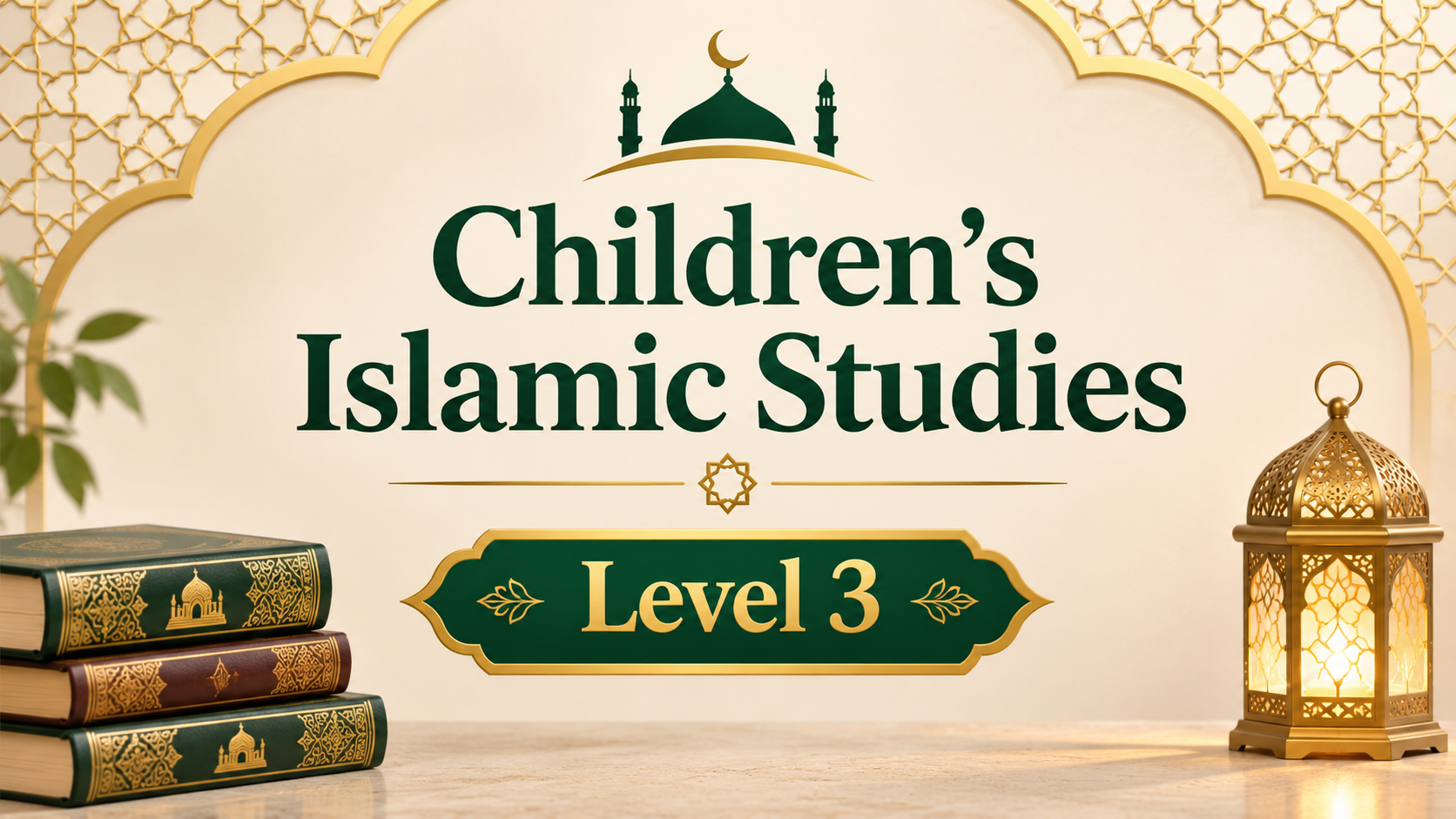
Children’s Islamic Studies – Level 3

Advanced Islamic Knowledge & Cambridge IGCSE Islamiyat Preparation

30 Structured Lessons | Self-Paced Online Learning | £150

About the Course

Our Children’s Islamic Studies Level 3 programme is designed for students who are ready to take their Islamic knowledge to the next level.

Building upon the foundations established in Levels 1 and 2, this programme introduces students to more advanced Islamic teachings, challenging questions, historical developments and the application of Islamic principles.

As children grow older, they naturally begin to encounter more complex questions about Islam, its rulings, beliefs and relationship with the modern world.

We believe that students should be equipped with the knowledge and confidence to understand these subjects through the Qur’an, authentic Sunnah and recognised Islamic scholarship.

Rather than simply memorising information, this course encourages students to develop deeper understanding, examine evidence, recognise misconceptions and explain Islamic teachings clearly.

The programme also incorporates Cambridge IGCSE Islamiyat examination preparation, making it suitable for students who may wish to pursue formal Islamic qualifications in the future.


COURSE MODULES

Module 1 – Advanced Islamic Beliefs and Understanding

Students explore deeper questions relating to Islamic belief and develop the ability to approach challenging religious discussions with knowledge and confidence.

Topics include:

  • Understanding the existence of Allah and Islamic arguments concerning creation.
  • The relationship between faith, reason and revelation.
  • Recognising misconceptions about Islamic beliefs.
  • Understanding the importance of authentic evidence.
  • Responding to questions and doubts about Islam.
  • Distinguishing Islamic teachings from unsupported opinions.

Students are encouraged to think carefully about the subjects they study and understand the reasoning behind Islamic teachings.

Module 2 – Islamic Spirituality and Purification of the Soul

This module explores the importance of developing a sincere relationship with Allah and understanding Islamic spirituality.

Students examine the distinction between authentic acts of worship and practices that have developed through different historical and religious traditions.

Topics include:

  • Purification of the heart and intentions.
  • Sincerity in worship.
  • The importance of dhikr and remembrance of Allah.
  • Understanding the meaning of taṣawwuf.
  • The historical development of Sufism.
  • Different spiritual practices and their relationship with Islamic teachings.
  • The importance of following the Qur’an and authentic Sunnah.

Students develop an understanding of why spiritual practices must be examined through reliable Islamic evidence.

Module 3 – Marriage, Family and Islamic Responsibilities

Students explore Islamic family relationships and the importance of justice, rights and responsibilities.

The subject is taught appropriately for older children and teenagers, focusing on Islamic principles and understanding rather than private marital matters.

Topics include:

  • Marriage as an institution in Islam.
  • Rights and responsibilities.
  • Justice within family relationships.
  • The meaning of polygyny.
  • The conditions attached to polygyny.
  • Understanding the difference between permission and obligation.
  • Recognising the difference between Islamic rulings and cultural practices.

Students learn how to examine sensitive questions accurately and avoid misunderstandings about Islamic teachings.

Module 4 – Women, Equality and Contemporary Questions

This module introduces students to questions surrounding women, rights, equality and modern social ideas.

Students learn to distinguish Islamic teachings from cultural practices and examine different arguments using Islamic evidence.

Topics include:

  • Rights and responsibilities in Islam.
  • The meaning of equality and justice.
  • Understanding discussions surrounding feminism.
  • How Islamic teachings are sometimes misunderstood or misrepresented.
  • The importance of examining claims rather than accepting them without evidence.
  • Developing balanced and well-supported explanations.

Module 5 – Islamic Ethics and the Sanctity of Life

Students explore the Islamic understanding of human life, dignity and responsibility.

The module introduces important ethical principles and examines how Islamic teachings address difficult contemporary questions.

Topics include:

  • The sanctity of human life.
  • The importance of protecting life.
  • Islamic ethical principles.
  • Abortion and the different circumstances discussed by scholars.
  • Euthanasia and end-of-life decisions.
  • The importance of context when discussing medical issues.
  • Understanding how evidence is used in Islamic legal and ethical discussions.

These subjects are approached sensitively and in an age-appropriate manner.

Module 6 – Intoxicants and the Protection of the Mind

Students examine Islamic teachings relating to alcohol, recreational drugs and intoxicating substances.

Topics include:

  • The prohibition of intoxicants.
  • Evidence from the Qur’an and Sunnah.
  • Understanding the meaning of intoxication.
  • The importance of protecting the intellect.
  • Harm to individuals, families and society.
  • The distinction between religious rulings and medical considerations.
  • Applying Islamic teachings to contemporary situations.

Module 7 – Islamic History, Beliefs and Different Groups

Students explore important historical developments within the Muslim community and the origins of different religious groups.

Topics include:

  • The early Muslim community.
  • The leadership of the Rightly Guided Caliphs.
  • Historical disagreements after the death of the Prophet Muhammad ﷺ.
  • The origins of Sunni and Shīʿah differences.
  • Understanding the importance of historical context.
  • Distinguishing historical facts from inaccurate or exaggerated accounts.
  • Approaching religious differences with knowledge and appropriate manners.

Module 8 – Apostasy, Faith and Islamic Law

Students are introduced to a complex subject within Islamic belief and law.

The lessons explain the importance of understanding Islamic rulings accurately rather than relying upon simplified statements or misconceptions.

Topics include:

  • The meaning of apostasy.
  • Understanding faith and disbelief.
  • The distinction between major sins and leaving Islam.
  • Doubts, ignorance and confusion.
  • Repentance and returning to Allah.
  • The dangers of making accusations of disbelief.
  • Understanding scholarly discussions about Islamic legal rulings.
  • The importance of legal authority and established procedures.

Students are taught to recognise the difference between learning about an Islamic ruling and attempting to apply legal judgements themselves.

Module 9 – Islamic History and the Rightly Guided Caliphs

Students revisit significant events and individuals from early Islamic history, strengthening their knowledge for more advanced study and examination preparation.

Topics include:

  • The life and mission of the Prophet Muhammad ﷺ.
  • Important developments in Makkah and Madinah.
  • The Hijrah and its significance.
  • The early Muslim community.
  • The lives of the Companions.
  • Abū Bakr, ʿUmar, ʿUthmān and ʿAlī, may Allah be pleased with them.
  • Their lives before becoming Caliphs.
  • Their leadership and contributions.
  • The importance of understanding historical events in context.

Module 10 – Qur’anic Themes and Islamic Knowledge Revision

This module strengthens students’ ability to understand and explain important Qur’anic teachings.

Rather than memorising translations alone, students learn to identify the central themes within Qur’anic passages and explain their relevance.

Topics include:

  • Identifying major Qur’anic themes.
  • Understanding teachings about Allah and His attributes.
  • Revelation and divine guidance.
  • The relationship between Allah and His creation.
  • Accountability and the Hereafter.
  • The importance of following the Qur’an.
  • Explaining how Qur’anic teachings influence Muslim life.
  • Using Qur’anic evidence effectively in examination answers.

The module also helps students consolidate their knowledge of Islamic history, belief and practice.

Module 11 – Understanding the Cambridge IGCSE Islamiyat Examination

Students are introduced to the structure of Cambridge IGCSE Islamiyat and the skills needed to approach the examination.

Topics include:

  • Understanding Paper 1 and Paper 2.
  • The subjects covered within each paper.
  • Compulsory and optional questions.
  • Understanding question wording.
  • Recognising different command words.
  • Identifying what a question requires.
  • Understanding descriptive and explanatory questions.
  • Developing organised written answers.
  • Using relevant Islamic evidence.
  • Understanding how marks are awarded.

This module provides students with a structured introduction to examination technique.

Module 12 – Cambridge Islamiyat Past-Paper Workshops

Students begin applying their knowledge to examination-style questions and past papers.

Topics include:

  • Working through Paper 1 questions.
  • Understanding compulsory questions.
  • Recognising the main focus of a question.
  • Selecting relevant information.
  • Writing detailed factual accounts.
  • Explaining the significance of Islamic teachings.
  • Using Qur’anic and hadith evidence to strengthen answers.
  • Developing time-management skills.
  • Recognising common examination mistakes.
  • Improving responses through guided examples.

Students are encouraged to develop confidence in answering questions independently.

Module 13 – Final Revision and Examination Preparation

The final part of the programme brings together the knowledge and skills developed throughout the course.

Students revisit important Islamic Studies subjects and apply their knowledge through structured revision and examination practice.

Topics include:

  • Revising major Qur’anic themes.
  • Reviewing Islamic history and the Seerah.
  • Revisiting the Rightly Guided Caliphs.
  • Consolidating important Islamic beliefs and teachings.
  • Practising examination-style responses.
  • Identifying relevant supporting evidence.
  • Working through timed examination questions.
  • Recognising areas requiring further revision.
  • Developing confidence before formal examinations.

WHAT WILL YOUR CHILD GAIN?

By completing this programme, students should develop:

  • A deeper understanding of Islamic beliefs and teachings.
  • Greater familiarity with the Qur’an and authentic Sunnah.
  • The confidence to approach challenging questions about Islam.
  • Stronger knowledge of Islamic history.
  • An understanding of important Islamic legal and ethical discussions.
  • The ability to distinguish Islamic teachings from cultural practices and misconceptions.
  • Improved written explanation and analytical skills.
  • Greater familiarity with Cambridge IGCSE Islamiyat examination requirements.
  • Experience answering examination-style questions.

WHO IS THIS COURSE SUITABLE FOR?

This programme is suitable for:

  • Children and teenagers who have completed earlier Islamic Studies levels.
  • Students who already possess a good foundation in Islamic knowledge.
  • Home-educated students seeking a structured Islamic Studies programme.
  • Young people interested in advancing their Islamic knowledge.
  • Students preparing for GCSE or IGCSE-level Islamic education.
  • Families seeking a flexible online Islamic Studies programme.

Although previous completion of Levels 1 and 2 is beneficial, students with sufficient existing knowledge may also benefit from Level 3.

HOW DOES THE COURSE WORK?

The programme consists of 30 structured lessons, delivered through our online learning platform.

Students purchasing the course in full receive immediate access to all lessons.

This allows families to organise their learning according to their individual circumstances.

Students can study at their own pace, revisit topics they find challenging and spend additional time on examination preparation where required.

There are no scheduled live lessons to attend.

COURSE DETAILS

Course: Children’s Islamic Studies – Level 3

Number of lessons: 30

Delivery: Online and self-paced

Price: £150

Access: Immediate access to the complete course upon full purchase

Focus: Advanced Islamic Studies and Cambridge IGCSE Islamiyat preparation

WHY CHOOSE MUSLIM EMPOWERMENT SOLUTIONS?

We believe Islamic education should provide children with more than information to memorise.

As young Muslims grow older, they encounter questions about their faith, contemporary society, Islamic rulings and religious history.

It is important that they develop the knowledge and confidence to approach these questions through authentic Islamic evidence.

Our programme encourages understanding, reflection and the development of academic skills whilst strengthening students’ Islamic knowledge.

ENROL TODAY

Give your child the opportunity to develop deeper Islamic understanding through a comprehensive and structured learning programme.

Full Course Fee: £150

All 30 Lessons Available Immediately

Muslim Empowerment Solutions

www.muslimempowermentsolutions.com

Please note: This programme includes preparation relevant to Cambridge IGCSE Islamiyat but does not itself award an official Cambridge qualification. Students wishing to sit the examination must register separately through an approved examination centre.

0
0
Your Cart
Your cart is emptyReturn to Shop
[]