Fiqh of Menstruation for Sisters – Course Details
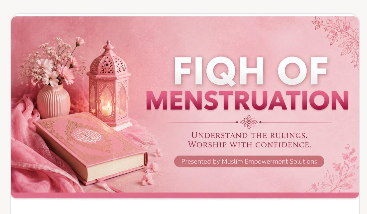
The Fiqh of Menstruation for Sisters course provides a detailed and practical study of the rulings every Muslim woman needs to understand concerning menstruation, irregular bleeding and postnatal bleeding.
This course goes beyond simply learning what a woman can and cannot do during her period. It helps sisters understand how to recognise their own menstrual patterns, how different types of bleeding are classified, and how the Islamic rulings are applied in real-life situations.
Throughout the course, we also explore the recognised differences of opinion amongst the scholars. Rather than presenting every issue as though there is only one view, sisters will learn why scholars have differed and how following different valid scholarly opinions can sometimes result in different rulings.
Topics covered include:
- Ḥayḍ, istihāḍah and nifās – understanding the different types of bleeding
- Understanding your menstrual cycle and your normal habit (ʿādah)
- How medical knowledge and observation can help us understand menstrual patterns
- The different scholarly opinions concerning the minimum and maximum duration of menstruation
- How to recognise irregular bleeding (istihāḍah)
- Frequency, regularity, duration and volume of bleeding
- How medical understanding connects with Islamic rulings
- Postnatal bleeding (nifās) and the different opinions regarding its duration
- Bleeding during pregnancy and the scholarly differences surrounding it
- Changes in menstruation during perimenopause
- Yellow and brown discharge and when it is or is not considered part of menstruation
- Recognising the signs that menstruation has ended
- Prayer and fasting during menstruation
- Which missed acts of worship need to be made up
- Dhikr, duʿā, charity and other acts of worship during menstruation
- Entering and remaining in the masjid
- Reciting the Qur’an and touching the muṣḥaf, including the different scholarly opinions
- Women’s access to Islamic knowledge during menstruation
- Ghusl after menstruation and returning to worship
- Purification and wuḍūʾ during istihāḍah
- Intercourse during istihāḍah and the scholarly discussion surrounding it
- Menstruation during Hajj, including what a woman can continue to do and the rulings concerning ṭawāf
Understanding Differences of Opinion
An important part of the course is understanding that there are genuine areas of valid scholarly disagreement within the fiqh of menstruation.
You may therefore have previously been taught a ruling that differs from another sister’s practice. This does not necessarily mean that one of you is wrong. The course introduces the recognised opinions so that sisters can understand where these differences come from rather than becoming confused when they encounter them.
Where valid differences exist, sisters can follow the recognised scholarly opinion they trust and apply it consistently, seeking knowledgeable guidance where their individual circumstances require it.
How the Course Is Delivered
The course is self-paced, allowing you to work through the material in your own time. The learning is broken into manageable modules and supported by recorded teaching, written summaries and visual infographics, making it easy to revisit particular rulings whenever you need them.
Whether you are learning these rulings for the first time or want to strengthen and clarify knowledge you already have, the course is designed to give you a structured understanding of this important area of fiqh and greater confidence in knowing how the rulings apply in everyday life.